
Foreign direct investment in India jumped 47.8 per cent to $16.17 billion in April-June this fiscal on healthy inflows in services, computer, telecom and pharma sectors, according to government data. FDI inflows were at $10.94 billion in April-June 2023-24. The data showed that overseas inflows in May rose to $5.85 billion and in June to $5.41 billion from $2.67 billion and $3.16 billion, respectively, in the year-ago period.

The court said there is nothing on record to suggest that since 2023, Purkayastha was ever called to join the investigations.

The government is planning to introduce legislative changes to the Foreign Exchange Management Act (Fema) regulations, with a focus on easing the pathway for inflows from a foreign portfolio investor to transition seamlessly into foreign direct investments (FDI) once the FPI surpasses the 10 per cent ownership threshold in a company. This move stems from multiple requests by foreign investors seeking to streamline the reporting requirements that arise when their stakes in Indian firms cross the 10 per cent mark.

Elon Musk-led Tesla Inc is yet to express interest in India's flagship scheme to attract global investment in electric vehicle (EV) manufacturing, said Union Minister for Heavy Industries H D Kumaraswamy on Monday. In contrast, multiple global automobile giants -- such as Mercedes-Benz, koda Auto Volkswagen, Hyundai Motor, and Kia Motors -- are keen to participate, the minister noted.

The US Trade Representative noted that India's average applied tariff rate stood at 17% per cent, the highest of any major world economy.
Net inflows were $18.4 billion for the rolling 12-month period ended January 2024 compared to $32.7 billion for the rolling 12-month period ended January 2023.
Net foreign direct investment (FDI) in India, inflows minus outflows, declined sharply in April-August this year to $2.99 billion from $18.03 billion in the same period last year on moderation in global activities and a rise in repatriation. The Reserve Bank of India's data (October 2023 bulletin) said FDI in India was $7.28 billion and FDI by India, that is money invested abroad from the country, was $4.28 billion in April-August 2023. As for 2022, FDI in India was $22.79 billion and FDI by India was $4.76 billion in April-August.

India and the US desire to give preferential market access to each other's businesses and teams of both the countries are working together on the proposed bilateral trade agreement, Commerce Minister Piyush Goyal has said. In February, US President Donald J Trump and Prime Minister of India Narendra Modi announced plans to negotiate the first tranche or phase of a mutually beneficial, multi-sector Bilateral Trade Agreement (BTA) by fall (September-October) of 2025.

In response to the panic triggered by Trump's trade policies, the RBI net sold approximately $43 billion in the second half of FY25 to curb volatility, as the rupee plunged to a low of 87.95 per dollar in February this year.

Brendan Lynch, the assistant US trade representative for South and Central Asia, will pay a five-day visit to India beginning Tuesday, days before US President Donald Trump's tit-for-tat tariff kicks in. The senior US trade official is expected to hold talks with Commerce Minister Piyush Goyal besides meeting a number of senior Indian officials.

The Indian economy could remain less affected by global trade wars than other countries because the two engines of domestic growth - consumption and investment - are likely to face a limited impact from such headwinds, according to an article on the 'State of the Economy' in the Reserve Bank of India's (RBI's) bulletin, released on Tuesday.

The resilience of the economy and strength of domestic demand will continue to make India an engine of growth amid the rapidly evolving global trade landscape as a result of US tariffs, Finance Minister Nirmala Sitharaman said in London on Tuesday.

Interrupting a two-month streak of decline, outward foreign direct investment (FDI) rose sequentially to $1.85 billion in July over $1.07 billion in June, an increase of 73 per cent. However, it was lower than the $2.18 billion in July last year, according to the Reserve Bank of India data. Outbound FDI, expressed as financial commitment, has three components - equity, loans, and guarantees.
The sectors that received most of the investment during this period included manufacturing, financial services, business services, computer services, electricity, and other energy sectors.

This is despite the fact that total FDI into India has fallen by 22 per cent from $58 billion in FY22 to $46 billion in FY23, according to the Reserve Bank of India.

The Enforcement Directorate on Monday said it has issued a Rs 611 crore show cause notice to Paytm's parent company and linked entities for "contravention" of the FEMA on various counts.
Reflecting subdued global economic growth, India's outward foreign direct investment (FDI) fell by 33.3 per cent sequentially to $1.21 billion in August, compared to over $1.82 billion in July.

India has set an ambitious target of textile exports worth $100 billion by 2030, but the recent data released by the Ministry of Textiles pertaining to India's textile and apparel trade puts achievement of the goal in jeopardy.

'We face the risk of remaining a low-income country for a very long time unless something changes in the next few years.' 'Instead of constantly talking about becoming a developed economy, we need to start fixing the problems of the economy one by one.' 'There is so much potential, and we are squandering away the opportunity.'

India and the United States will finalize the contours, schedule of negotiations, and terms of reference for a proposed bilateral trade agreement (BTA) during a three-day meeting beginning Tuesday. The agreement is expected to be finalized in two tranches, with the first phase focusing on goods trade. The US team, led by Assistant US Trade Representative for South and Central Asia Brendan Lynch, will be in India from March 25-29 to discuss the agreement. Both countries are aiming to conclude the first phase of the agreement by fall 2025.

India needs another shot of difficult reform, of the kind only possible at gunpoint. Mr Trump holds that gun to our heads now. A drastic reduction in tariff protection, other elements of sarkari wet-nursing will force entrepreneurial India to become competitive again, argues Shekhar Gupta.

Soros, a Hungarian-American political activist, and his organisations like OSF have been accused by the ruling BJP of acting against India's interests. His utterances during the Adani-Hindenburg controversy also drew criticism from the party.

'Expect India to keep doing well irrespective of geopolitics.'
Showing the effect of the slowdown in global economic activity, the equity foreign direct investment (FDI) into India declined sharply to $13.9 billion in April-July 2023 from $22.04 billion a year ago. The net FDI, inflows minus outflows, declined from $17.28 billion in April-July 2022 to $5.70 billion in April-July 2023 on account of moderating gross FDI and a rise in repatriation. Gross FDI into India moderated to $22.0 billion during April-July 2023 from $29.6 billion a year ago, according to Reserve Bank of India data.

Commerce Minister Piyush Goyal's scathing remarks on Indian startup ecosystem and its innovation priorities have drawn sharp reaction from the industry, with Zepto CEO Aadit Palicha putting up a strong defence citing the company's contribution to jobs, FDI and terming it a "miracle in Indian innovation".

The Modi government's flagship initiative 'Make in India' launched 10 years ago has helped the country boost exports, push investments and promote manufacturing. Under the initiative, launched on September 25, 2014, a series of measures have been taken by the government to boost local manufacturing. These initiatives include the rollout of production linked incentive (PLI) schemes for 14 sectors, easing foreign direct investment (FDI) norms, reducing compliance burden to improve business climate, all approvals through single window, and rolling out of the national logistics policy.
Foreign direct investment (FDI) equity inflows in India declined 24 per cent to $20.48 billion in April-September 2023, dragged by lower inflows in computer hardware and software, telecom, auto and pharma, according to government data. FDI inflows stood at $26.91 billion during the first six months of the last fiscal. Inflows during January-March 2023 also contracted 40.55 per cent to $9.28 billion.

Whether it's Carrefour, Ford, or other foreign majors, they are ready to adjust their strategies and design their plans in a way that would address the Indian consumption story.

'The finance minister has done as much as she can when you look into the fiscal constraints she had.'

Anticipating US action on tariffs, India seems to have made the first move by revamping its tariff structure by reducing the slabs to eight rates, points out Mukesh Butani.
Foreign direct investment into the country is expected to rebound in the coming months on account of India's high economic growth, and steps to further improve the business environment of India, the Economic Survey said on Tuesday. The rise in global uncertainty in the wake of the Russia-Ukraine conflict, FDI equity inflows in the manufacturing sector in the first half of the current fiscal (April-September) fell below its corresponding level in the first half of 2021-22, the document, which was tabled in Parliament, said. The monetary tightening at the global level has further restricted the FDI equity inflows, the survey said.

India is not "rethinking" supporting investments from China, said Commerce and Industry Minister Piyush Goyal on Tuesday, referring to a proposal made in the Economic Survey 2024. The survey by India's chief economic advisor last week said India had two "choices" to benefit from the so-called China plus one strategy, either by integrating into that country's supply chain or by promoting foreign direct investment (FDI). "Chief economic advisor's report speaks about new ideas and gives out their own thinking. It is not at all binding on the government and there is no rethinking to support Chinese investments in the country," Goyal told reporters in Delhi.

India's outward Foreign Direct Investment (FDI) nosedived to $11.12 billion in January-June (H1 2023) from $23.57 billion in the same period last year, indicative of the slowdown in the global economy, according to the Reserve Bank of India (RBI) data. The outward FDI expressed as the total financial commitment, has three components, namely equity, loan and guarantees. The sharp contraction in the commitments (outward FDI) was prominent in the April-June 2023 period.

Issues related to the proposed free trade agreement (FTA) and bilateral investment treaty between India and the UK are expected to figure during the three-day visit of Finance Minister Nirmala Sitharaman to London from April 8-10, official sources said. The minister will attend a host of meetings, including the India-United Kingdom Economic and Financial Dialogue, in London.

India has reduced the time period for foreign investors to seek international arbitration from five years to three years as part of the recently signed investment pact with the United Arab Emirates (UAE), a departure from its model Bilateral Investment Treaty (BIT). Under the Investor-State Dispute Settlement (ISDS) mechanism, if the Indian judicial system is unable to resolve a dispute within this shortened period, investors can resort to international arbitration. The investment pact, signed on February 13 in Abu Dhabi, came into force on August 31, replacing the previous pact.
India remains an attractive destination for foreign direct investments (FDI) on account of healthy prospects of economic growth and its skilled workforce, according to a survey by Deloitte. A large proportion of international business leaders remain confident in India's short- and long-term prospects and are readying plans to make additional and first-time investments in the country, it said on Tuesday. "The survey, which questioned 1,200 business leaders of multinational corporations in the US, UK, Japan and Singapore, found that India remains an attractive destination for investments, scoring highly for its skilled workforce and prospects for economic growth," the survey - India's FDI Opportunity - said.

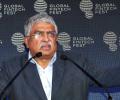
'Binary fission will happen -- startups will lead to more startups.'
Total foreign direct investment (FDI) inflow to India declined to $74.01 billion in the calendar year 2021, which is 15 per cent lower from $87.55 billion recorded in the previous year, the ministry of commerce & industry said on Wednesday. The FDI inflow includes equity inflow, equity capital of unincorporated bodies, re-invested earnings and other capital. "FDI is largely a matter of commercial business decisions and FDI inflow depends on a host of factors such as availability of natural resource, market size, infrastructure, political and general investment climate as well as macro-economic stability and investment decision of foreign investors.
 © 2026 Rediff.com - Advertise with us - Disclaimer - Privacy Policy - Sitemap - Feedback - About us - Terms of use - Grievances